
Australia's used EV market just saw its biggest spike ever — here's why
MotorRegistry Intelligence data reveals a significant spike in used EV interest as fuel prices surge...
Read moreA REVS Check provides you with critical information on financial interests, stolen records, and written-off status.
This includes finance owing, written-off status, or stolen records that could cost you thousands.
Buying a stolen vehicle means losing both the car and your money - with no legal recourse.
When a vehicle has undisclosed finance, the lender can repossess it - even after you've paid.
Enter your VIN or Rego
Enter details & pay securely
Receive REVS Check link by email and SMS.
"Best. Customer. Service"
Seriously, I clicked purchase and within a matter of seconds my REVS Check arrived.
Gabby C, Ashfield NSW
2013 Honda Civic
"It took seconds, fast and easy."
I've bought REVS Checks before and they took hours to arrive and were difficult to read.
Darren M, South Perth WA
2017 Audi A6
"Thank goodness for the REVS Check!"
Wow, thank you for making it easy to see the car had been written-off! Glad I dodged that one.
Sarah A, Bendigo VIC
2008 Toyota Hiace
A MotorRegistry REVS Check gives you key insights, including financial interests, written-off records, and stolen vehicle status.
Upgrade to MotorRegistry's' comprehensive vehicle history report for a deeper dive into its full history.
Get everything you need to make a confident vehicle purchase:
We’re the only service that provides a full recall check and common issues guide specific to your vehicle model and year. Make an informed purchase with confidence.
Personal Property Securities Register
MotorRegistry.com.au provides quick and easy access to conduct searches of the Australian Government's Personal Property Securities Register (PPSR).
A PPSR Check (formerly REVS Check) tells us if there is finance owing on your car, or another kind of encumberance which may result in the car being repossessed or recovered.
MotorRegistry.com.au provides the most comprehensive, accurate, secure and fast REVS Checks in Australia
Stay informed with expert advice on buying and selling used vehicles safely
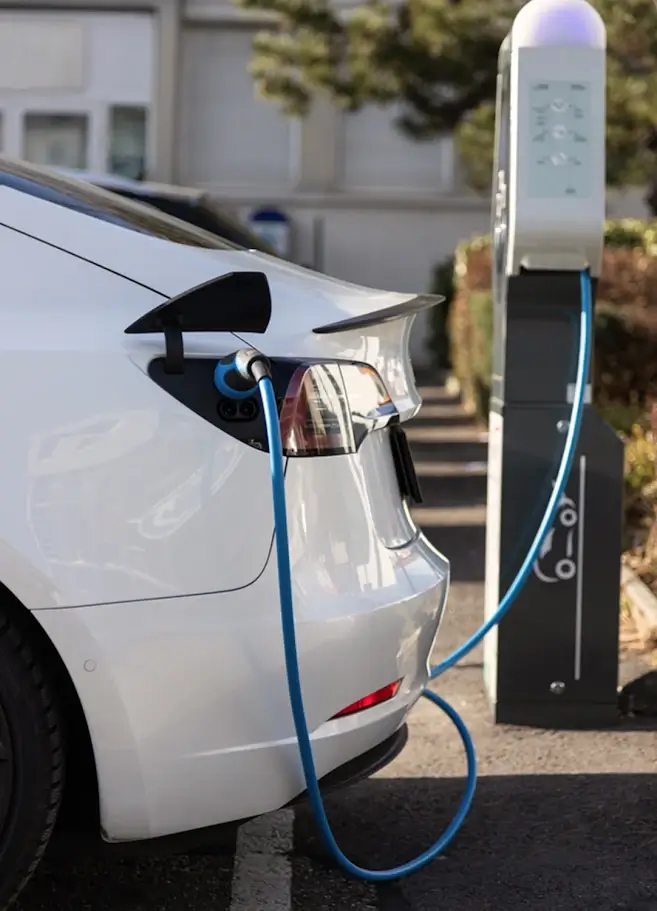
MotorRegistry Intelligence data reveals a significant spike in used EV interest as fuel prices surge...
Read more
Selling a used car can be both an exciting and daunting experience...
Read moreFind answers to common questions about vehicle history reports
A Register of Encumbered Vehicles (REVS) check was one of the preceding vehicle history checks that existed in Australia prior to the introduction of the Personal Properties Securities Register (PPSR).
Much like a modern-day PPSR check, the REVS check served the purpose of showing whether a used vehicle was encumbered - meaning it had finance owing or was being used as security for a loan. In the event the previous owner of an encumbered vehicle still owed money on a loan, the vehicle could be repossessed even if it had since been purchased by someone else. The purpose of a REVS check was to protect consumers from this risk.
REVS was just one of several state and territory operated databases that existed prior to the PPSR. REVS was the name used in NSW and Queensland, while a similar system in Victoria was referred to as the VSR, and the Vehicle Securities Register in WA. As all of these databases only contained information about a vehicle’s history within the set state or territory, it meant consumers had to run multiple database checks across different regions to get a full breakdown of a vehicle’s history. This fragmentation of databases was the driving force for the introduction of the national PPSR.
While plenty of people will still search for REVS check services in 2025, it was replaced back in 2012 by the PPSR. A PPSR check covers all states and territories.
REVS is the name of the previous database register. The name was used in both NSW and Queensland, but they were both standalone registers for each respective state. Every other state and territory had similar databases under different names.
REVS and all other state/territory-based registers were replaced by the PPSR on 30 January 2012. Today, the PPSR covers the same data that REVS did, but collates the information from all states and territories into one consolidated national database.
As part of our vehicle history reports, whether you opt for our Basic or Comprehensive version, a PPSR certificate (which is the modern equivalent of the REVS check) is included.
Much like the current PPSR checks that can be done now, the REVS check tended to report on four key facets:
Checking for finance owing or if the vehicle was used as a security for a loan that had not yet been paid off
Checking if the vehicle had been reported stolen
Checking if the vehicle had been written off at any point in the past (whether it was a statutory write-off or a repairable write-off)
Verifying the vehicle identity
As noted, given REVS was limited to specific states (NSW had its own version, as did Queensland), the check would only surface data for the specific state it was conducted in. With the current PPSR, these checks can be done for all states and territories at once.
While the PPSR has been in operation since 2012, people will still search for REVS checks from time to time. When considering the investment involved in purchasing a vehicle, even if it’s offered at a reduced price second-hand, most people purchase a vehicle as a long-term investment.
As such, if someone purchased a vehicle prior to 2012 and is only now looking for another used vehicle, they may simply be unaware of the fact that REVS was replaced by the PPSR in the intervening years. Of course, it can also be a matter of simplicity - they know it used to be called REVS, forget what it was replaced with, and will still enquire about REVS knowing they’ll be directed to the current system.
So, if someone discusses a REVS check, you can rest assured that this is now the PPSR check.
All existing encumbrance data that was contained in the REVS database back on 30 January 2012 was fully migrated over to the PPSR - and the same happened to all other state and territory security registers.
When these entries were brought over into the PPSR, they were denoted as “migrated registrations”. It’s important to note that only vehicles that were recorded with encumbrance (actual finance owing) at the time of the migration were carried over to the PPSR. If a vehicle had no encumbrance at the time of the migration, it was not entered into the PPSR.
Along with the integration of all encumbered vehicles, data from the Written-Off Vehicle Register (WOVR), which existed prior to the PPSR, was also carried over when the PPSR launched. Vehicle searches via the PPSR still make use of this government-supplied data, so write-off statuses that were applied to vehicles prior to 2012 still appear in the database.
In terms of stolen vehicle data, old registers such as REVS sourced this information via queries to police databases. The PPSR does this, as well, but searches all police databases throughout the country rather than being limited to the database of a single state or territory.
Loading sample report...
Your Vehicle Identification Number (VIN) is a unique 17-character code that identifies your vehicle.

Can't find your VIN? No problem! You can use your registration number instead.
