A basic PPSR vehicle check, which will be delivered to you in the form of PPSR certificate, will typically include the following information regarding a vehicle:
Encumbrance/finance owing status
This shows whether the vehicle is currently under finance or is being used as security for a loan. If there is a secured interest, the certificate will typically list the secured party (e.g. a bank or finance company), the type of security interest, and the registration date of the interest. If no security interests apply, the certificate will note, “No security interests recorded.”
Written-off vehicle details (WOVR)
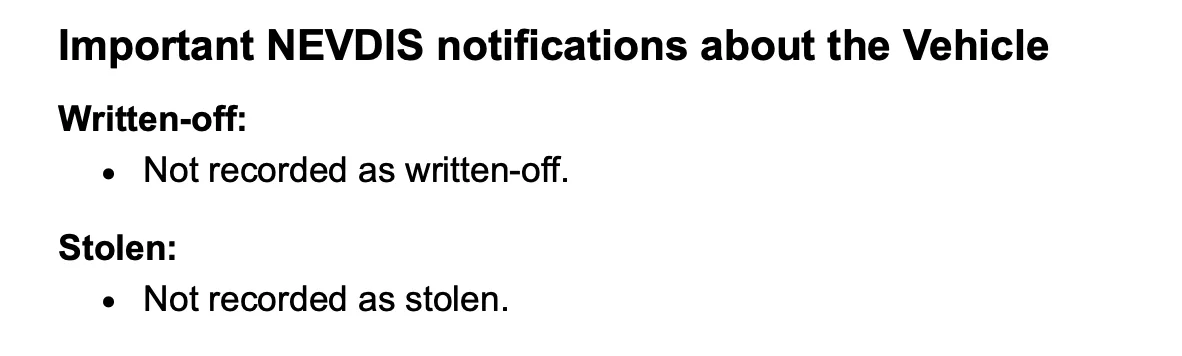
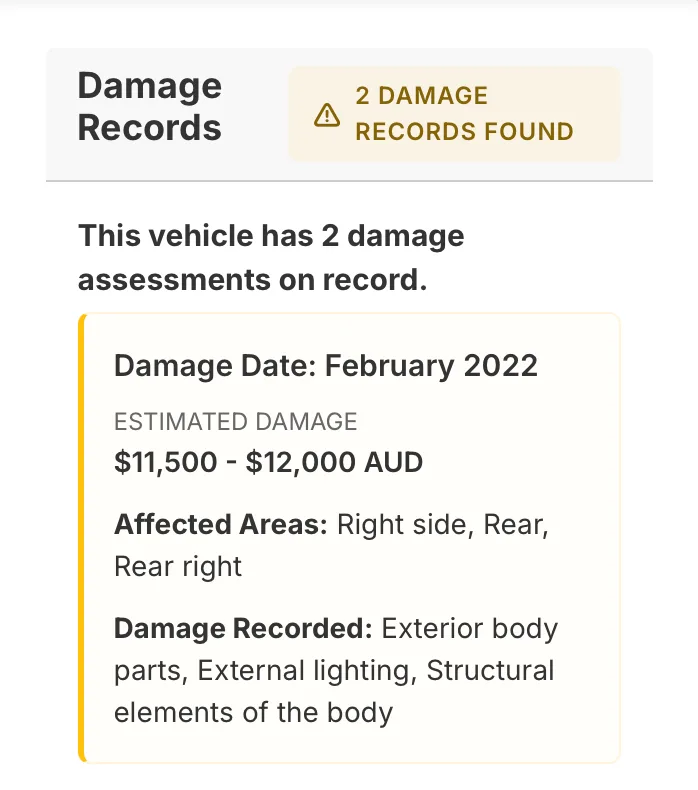
This indicates whether the vehicle has ever been damaged severely enough to be added to the WOVR (Written-Off Vehicle Register) and the type of damage (e.g. collision, flood damage, storm damage, etc.). In the event the vehicle was able to be repaired and re-registered after being written off, this will be detailed in the PPSR certificate. If the vehicle has never been written off, it will note, “Not listed as written off.”
Stolen vehicle status
This confirms whether the vehicle has been reported as stolen in any Australian state or territory, with the information being sourced from police databases nationally. If the vehicle was never stolen or reported stolen, the certificate will note, “Not listed as stolen.”
Vehicle identification details
The certificate will also verify the identifiers you entered for your check, confirming details such as the VIN, chassis number, engine number (if available), and the vehicle type (car, motorcycle, caravan, etc.). This helps you ensure you’re cross-checking the right vehicle.
PPSR search date and time/additional notes
As part of the vehicle check, the PPSR certificate will note the exact timestamp of when the search was conducted. The certificate will also include explanations of different terms (such as explaining written off statuses) and any limitations that apply to the data included in the certificate.