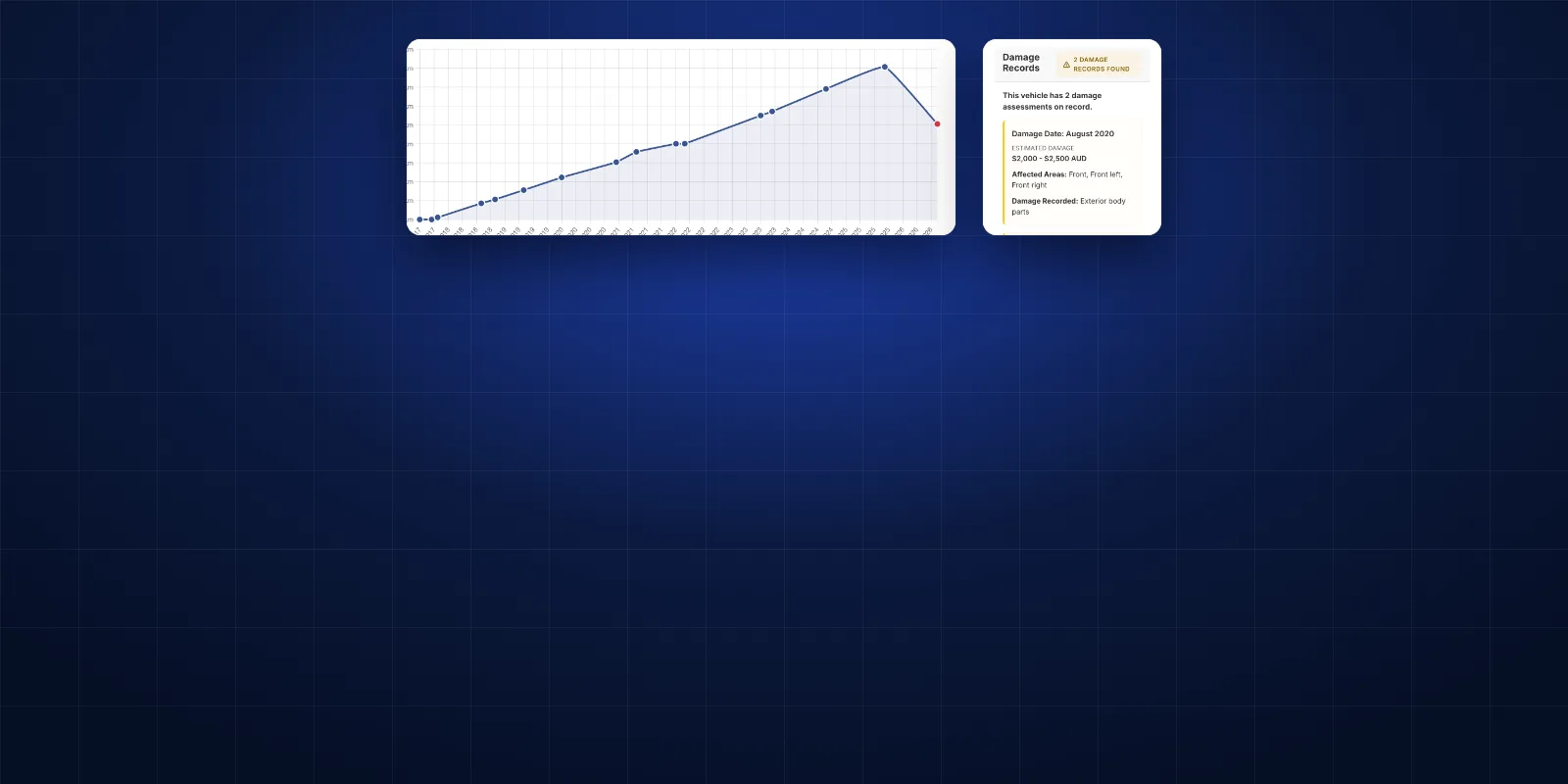
In August, nearly 1 in 4 cars that sailed through the government checks still had a damage assessment, a dodgy odometer or a repair record hiding in the full report. If you stopped at the PPSR, you'd never have known.
You know the drill. You find a car you like, take it for a spin, and before you hand over the cash you do the sensible thing and run a PPSR check. Two dollars, thirty seconds, three green ticks: no finance owing, not written off, not stolen. You knock a bit off the price, transfer the money and drive it home feeling pretty good about yourself.
And fair enough. The PPSR is the check everyone knows about, and it does a real job. In August it flagged roughly 1 in 6 of the cars our customers looked at, and every one of those people was glad they checked.
Here's the catch. The PPSR is a register of who legally has a claim on the car. That's all it was ever built to do. It doesn't know how many kilometres the car has done, whether it's been in a crash or had major repairs, whether anyone has serviced it, or whether there's a safety recall sitting on it. A car can have every one of those problems and still come back with three green ticks, because nobody asked the register about any of them.
One car, two checks
Here's a real car that was checked on MotorRegistry recently. On the left, what its official PPSR certificate said. On the right, what the Comprehensive Plus report for the exact same car turned up.

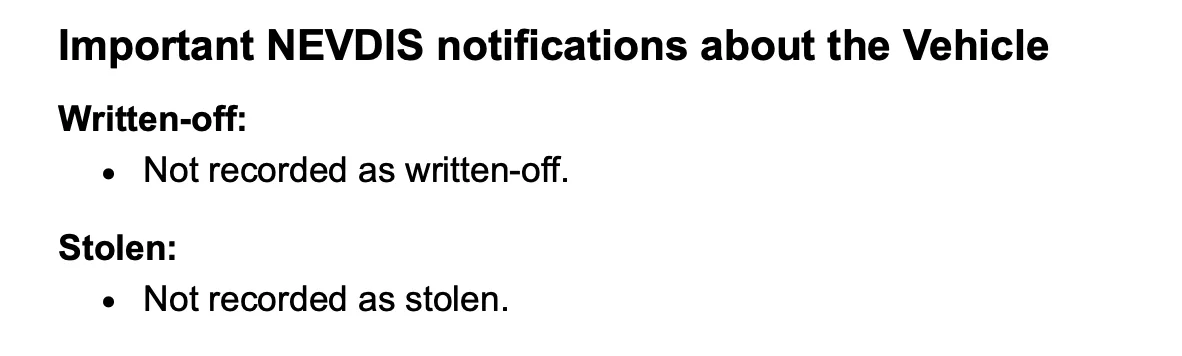
No finance owing. Not written off. Not stolen. Three clear results.
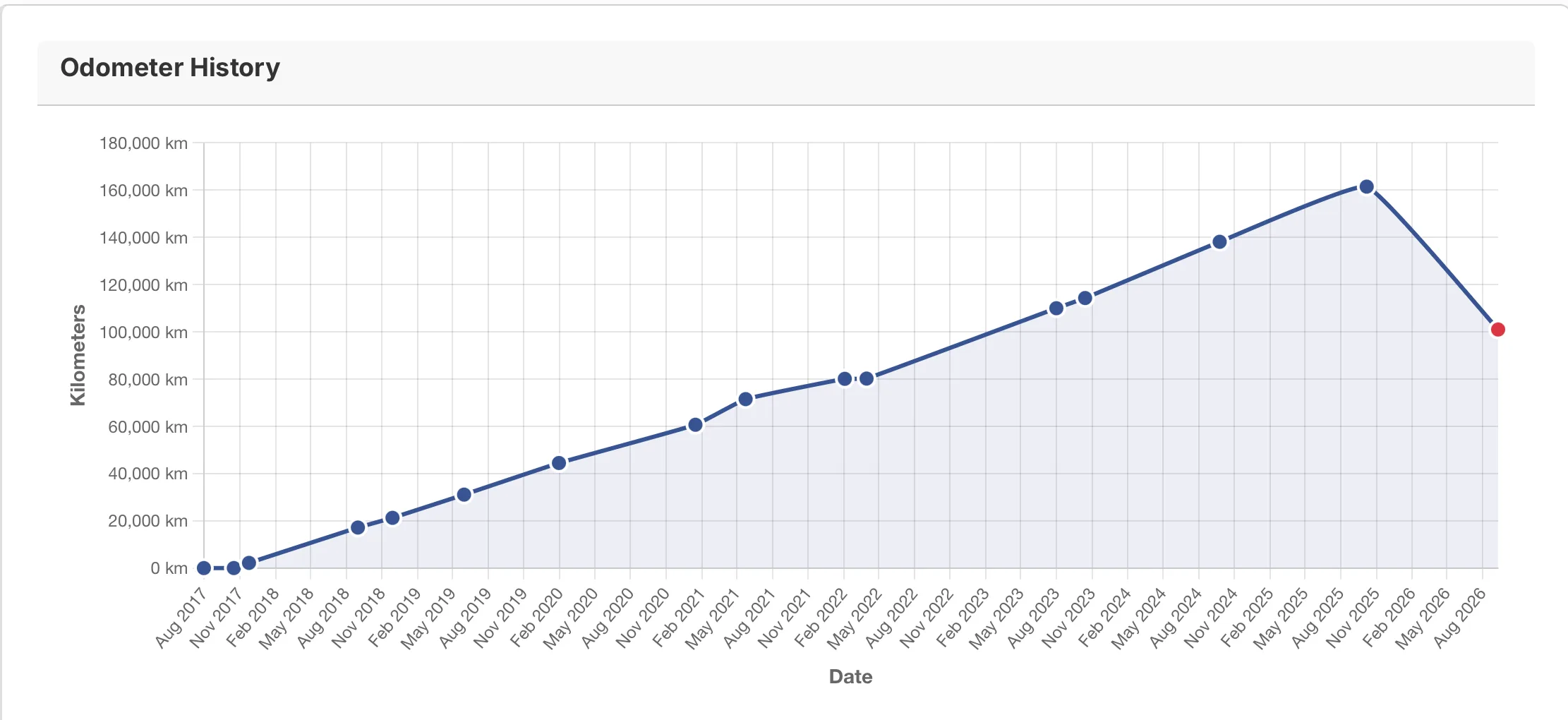
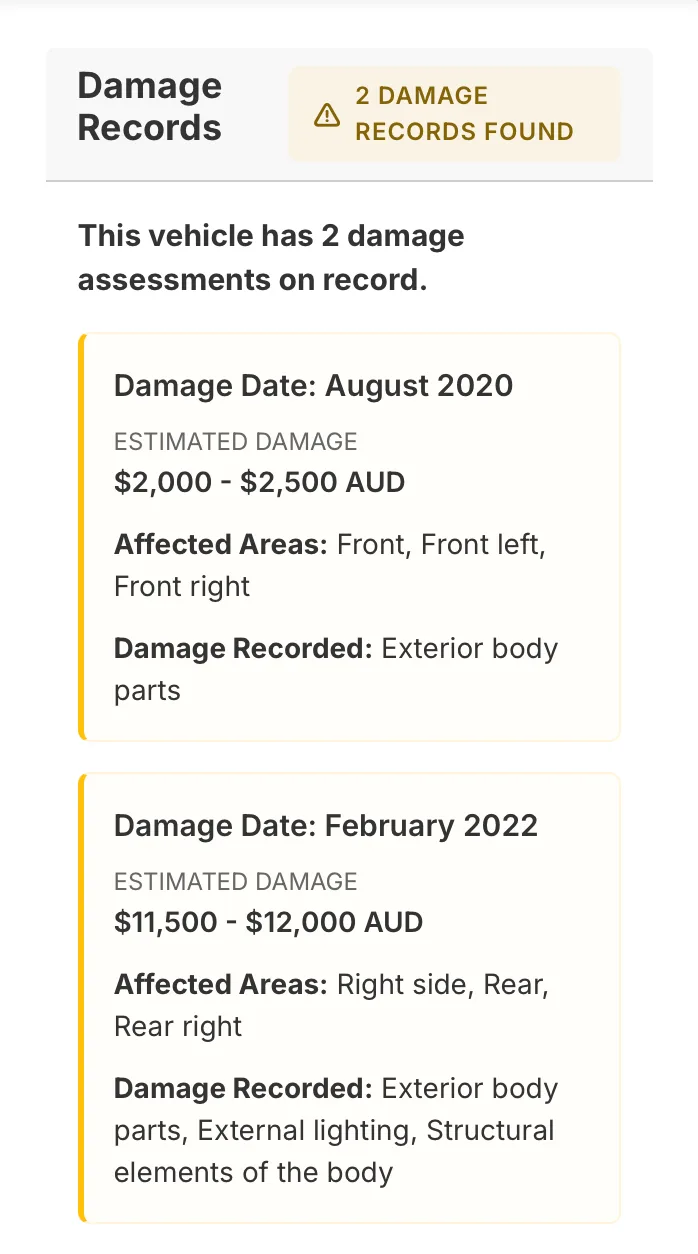
An odometer that's gone backwards by about 60,000 km, and two damage assessments, one of them structural and estimated at up to $12,000.
Nothing on that certificate is wrong. Every word of it is true. It just wasn't asked the questions that actually mattered for this car.
Nearly 1 in 4 cars that were clear on the PPSR in August had a damage assessment, an odometer rollback or a repair record waiting in the full report.
So what would you have driven home with?
These are the things that turned up most often on cars that had already passed the government checks, and what each one actually means once the car is sitting in your driveway.
A car that's been in a serious accident
About 1 in 6 cars that were clear on the written-off register had at least one damage assessment on record, and more than 1 in 5 of those came with a repair estimate over $10,000. That's a proper crash. It just wasn't bad enough to get the car written off.
Sometimes you'd never know. A good panel shop can make a car look and drive like nothing happened. But you paid the price for a car with a clean history, and what you own is a car with a crash in its past. That gap in value is real, and you'll feel it the day you sell, because the next buyer's report will show the damage even if yours didn't. And if the repair wasn't done properly, you may be carrying problems that only turn up in a workshop, or in the next accident.
A car that's done a lot more kilometres than it says
About 1 in 18 cars had odometer readings that didn't add up, and roughly 1 in 27 were flagged as a likely rollback. Some of the August cases had readings that dropped by more than 100,000 km between records.
Say you paid for a car with 90,000 km on the clock and it's really done 200,000. Every part of that car is older and more tired than you think. The big-ticket services you assumed were years away might be due right now: timing chain, transmission, suspension. The valuation you haggled over was based on a number that was never true. And if someone wound it back on purpose, your options come down to finding a private seller who has probably stopped answering the phone.
A car with gaps in its service history
Close to half the cars had no service on record when we'd expect to see one, and about a quarter had a gap long enough to raise an eyebrow. That's not proof of neglect. Plenty of people use a local mechanic who doesn't report anywhere. But you can't tell the difference from the driver's seat, and skipped maintenance is the number one reason a bargain turns into a money pit in its first year with you.
A car with a safety recall nobody mentioned
Four in ten cars had at least one manufacturer recall recorded against the model or the car itself. Recalls are fixed for free, but only if you know to book it in. Airbags, fuel systems and brakes are the usual suspects. If the previous owner binned the letter, you're now driving around with a known safety fault and nobody's told you.
Source: MotorRegistry Intelligence. Comprehensive Plus reports generated in August 2026 for consumer customers, counted once per vehicle, restricted to vehicles with no finance owing, written-off or stolen record at the time of the check.
Where these numbers come from
They're ours. We generate a lot of reports every month, and we can see what turns up across all of them. We don't publish anything about individual cars or the people who checked them, just the overall rates. The official PPSR certificate in every report comes straight from the government register. Everything else comes from MotorRegistry Intelligence: the vehicle dataset MotorRegistry has assembled by combining official records with verified industry sources that the government checks don't hold. That's where the damage assessments, odometer histories, service and repair records, recall status and registration histories come from, and it's the reason a MotorRegistry report can see what a PPSR check can't. The numbers above are simply what our own reports found in August, split into what the government checks can see and what they can't.
Before you hand over the money
Do the PPSR check. It's cheap, it's official and it catches real problems. Just don't stop there. On August's numbers, a car that's clear on the PPSR still has about a 1 in 4 chance of hiding a crash, a rollback or a repair record, and a much better than even chance of a service history worth a few pointed questions.
It's not about who's to blame
A PPSR certificate is the legal minimum: finance owing, written-off, stolen, and nothing else. No provider builds a report on less than that, and no report checks more than a MotorRegistry Comprehensive Plus report. Beyond the certificate, we look for:
- Odometer rollbacks. Every reading we hold for the car, cross-checked against the one on the dash today.
- Damage and repair records. Including damage that was assessed and repaired but never made it onto the written-off register.
- Service and maintenance history. So a skipped service or a repeat repair stands out instead of staying buried.
- Manufacturer recalls. Not just whether a recall exists, but whether the work was actually done.
- Registration and location history. The states and plates that show up when a car has been re-registered to shake off its past.
None of this is about pointing fingers. Most sellers don't know their car's full history either. The damage happened under a previous owner, the odometer was wound back years before they bought it, the recall letter went to someone else's address. The point isn't blame. It's that until someone checks, everyone in the sale is working off an incomplete picture. A MotorRegistry report is the one most likely to fill it in, for the buyer and often for the seller too. Run it while you can still walk away.
Data note:
- Source: MotorRegistry Intelligence (MRI). All completed consumer Comprehensive Plus reports generated in August 2026, counted once per vehicle. "Clear on the PPSR" means no registered security interest, no written-off register entry and no stolen record at the time of the check.
- Definitions: damage assessment means one or more damage or repair assessments recorded against the vehicle in data available to MotorRegistry, with repair estimates being the assessor's upper estimate at the time. Repair noted in service records means a collision, flood, airbag or significant mechanical repair identified in the vehicle's workshop history. Odometer anomaly means a recorded reading more than 1,000 km below an earlier reading, or a rollback flag from the report's odometer analysis. Recall notices include recalls the manufacturer reports as completed.
- Selection note: these are vehicles people chose to check, not a random sample of every car in Australia, so the rates describe checked vehicles rather than the national fleet.