Selling your car privately in 2026? This guide covers the paperwork, pricing, advertising, staying safe and closing the sale, plus what a full service history is worth when you set your price.
Selling a car yourself usually gets you more than a trade-in, but it puts the work on you. You have to find the paperwork, set a price, write the ad, deal with buyers and make sure the money is real before the keys change hands. None of it is hard if you do it in the right order. Here's that order.
Step 1: Get the paperwork together
Buyers judge a car by its paperwork as much as by its paint. Start here, because some of it takes a few days to track down.
What a full service history is worth
Research has found a full service history can add up to 26% to a car's resale price.
Buyers use the service history to judge how the car was kept. Without it, they assume the worst, and they haggle harder or move on to the next listing. A complete, dated record answers their biggest question before they ask it.
How to gather it
- The logbook. Find the service book that came with the car and check the stamps are filled in.
- Invoices. Dig out the dealer and workshop invoices for services, tyres, brakes and repairs.
- Windscreen stickers. The service sticker in the corner of the windscreen shows the date and kilometres of the last service.
- Ask the workshop. If you're missing records, call the dealership or workshop that serviced the car. Most can print out the service records they hold for it.
Put everything in date order so a buyer can follow the car's life from the first service to the last.
Add it to the car's MotorRegistry record
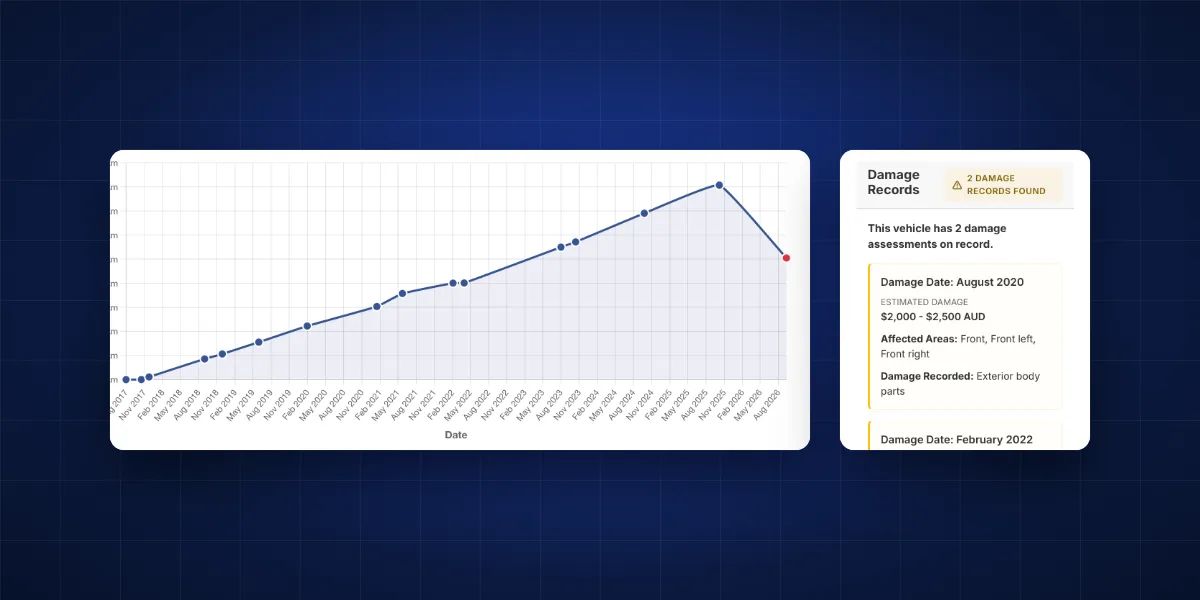
Paper records stay in your glovebox. To put them where buyers will see them, buy a MotorRegistry report on your own car and use its Add your service history button. Photograph the logbook pages and receipts on your phone, and the entries appear on the vehicle's report marked as owner-entered, alongside the records we hold from verified sources.
If a buyer runs a report on your car, they can also request the service history from you by email or text. You get a link to a simple form, with no account needed. Our service history report and logbook pages explain what buyers see.
Registration papers and a PPSR check
Have the current registration certificate ready, and make sure the rego is in your name. Buyers will want to know there is no finance owing on the car and that it hasn't been written off or reported stolen. A MotorRegistry vehicle history report includes the official PPSR certificate, so you can show a clean result up front. If finance is still owing, talk to your lender about paying it out as part of the sale before you advertise.
Step 2: Prepare the car
First impressions decide whether a buyer books an inspection or scrolls past.
- Clean and detail it. Wash, vacuum and wipe down the interior. A professional detail often pays for itself.
- Fix cheap cosmetic faults. A blown globe, a cracked number-plate light or a missing wheel cap all suggest neglect and cost little to fix.
- Check the tyres and lights. Bald tyres or a dead indicator give a buyer an easy reason to knock the price down.
- Find the spare key and the manuals. A missing second key is one of the first things buyers notice, and replacing one can be expensive.
Step 3: Price it
Pricing is where most private sellers go wrong, usually by starting too high and then sitting on the listing for weeks.
- Compare live listings. Search for the same make and model, year and kilometres, and note what similar cars are listed at in your area.
- Price for condition and history. A tidy car with a complete service record sits at the top of that range. One with gaps and wear sits lower.
- Use the service history. Given the research figure above, a full history is a genuine reason your car is worth more than a similar one without it. Say so in the ad and point buyers to it.
- Leave room to negotiate. Most buyers expect to talk the price down a little. Set your asking price above the figure you'll actually accept.
Step 4: Advertise
Photos
Take photos of the clean car in daylight, away from clutter. Cover all four sides, the front and rear three-quarters, the interior front and back, the boot, the odometer showing the kilometres, and the logbook open at the stamps.
The description
Be honest. List the model, year, kilometres, transmission and key features, then any faults. Buyers trust a seller who mentions the scratch on the rear bumper, and they find it anyway. If you have a full service history, say "full service history" in the first line of the ad.
Where to list
Carsales, Autotrader, Gumtree and Facebook Marketplace are the main places Australians look for used cars. Listing on more than one widens your audience. Whatever you choose, reply to enquiries quickly. Serious buyers contact several sellers at once, and the first good reply often gets the inspection.
Step 5: Screen buyers and stay safe
- Use a separate phone number or email. A free email address and a spare number keep your personal details out of the ad.
- Meet in public, in daylight. A busy car park works well. If buyers come to your home, have someone with you.
- Bring someone along. A second person is useful for inspections and test drives.
- Photograph the buyer's licence before a test drive. Go along for the drive, and keep the keys in your hand when you swap seats.
If a "buyer" insists you buy a specific vehicle history report from a link they send you, it's a scam. Read about the vehicle history report scam before you reply.
Step 6: Negotiate and close the sale
Know your floor
Decide on the lowest price you'll accept before anyone turns up, and don't drop below it in the moment.
Write a bill of sale
A bill of sale records the deal for both of you. It should include both parties' names and addresses, the car's details, the sale price, the odometer reading at the time of sale, the date, and both signatures. You can create a free digital Bill of Sale here, and both parties are emailed a PDF copy.
Transfer the registration
Transfer rules are set by each state's transport authority, so check yours before you list the car. Some states need paperwork before the car is even advertised. For example, in Queensland you must have a current safety certificate before you offer a registered car for sale.
Get paid properly
Bank transfer or PayID is the safest way to be paid. Wait until the money is cleared in your own account before you hand anything over. Never trust a screenshot of a payment or an email that says the money is on its way.
Hand over the car
Only once the payment has cleared, hand over the keys, the logbook, the manuals and the signed paperwork.
Step 7: After the sale
- Lodge the notice of disposal or transfer. Do this with your state's transport authority straight away, so tolls, fines and fees stop coming to you.
- Remove toll tags. Take out the tag and remove the car from your toll account.
- Clear out personal items and documents. Check the glovebox, door pockets, boot and under the seats.
- Reset the infotainment. Do a factory reset to wipe saved addresses and contacts, unpair your phone and disconnect any manufacturer app linked to the car.
- Cancel your insurance. Once the transfer is done, cancel the policy or move it to your next car.
Quick answers
Is it worth getting the car serviced before selling? If a service is due or close to due, usually yes. A fresh stamp in the logbook completes the record and shows the car has been looked after right up to the sale.
What if I've lost the logbook? Ask the dealers and workshops that serviced the car for a printout of their records, and gather any invoices you still have. Add what you can find to the car's MotorRegistry report so buyers can see it.
Do I need a PPSR check to sell my car? Not legally. But buyers will run one, and a clean report answers their questions before they ask.
Who pays for the transfer? The buyer usually pays the transfer fee and any stamp duty, but check your state's rules for what the seller has to lodge.
Ready to sell
Get the paperwork together first, put the service history where buyers can see it, price the car honestly and don't hand over the keys until the money has cleared. Do those four things and most private sales go smoothly.
Source: ICM research, 2011, reported by AM Online.