Previous Owners Check
How many owners has the car had, and who were they?
No national report can count a car's owners or name them. What it can show is how the car was kept.
There's no national record of how many owners a car has had, and no public record of who they were: owner details sit with each state and territory registry, and privacy law stops them being released. So a MotorRegistry report doesn't include an owner count or an owner's name, and nor can any other national report. The number of owners also isn't what decides whether a car is a good buy. How well it was looked after, whether its recalls were fixed, whether it has been crashed and whether the odometer adds up matter far more, and those are the records a report can show.
What a MotorRegistry report shows
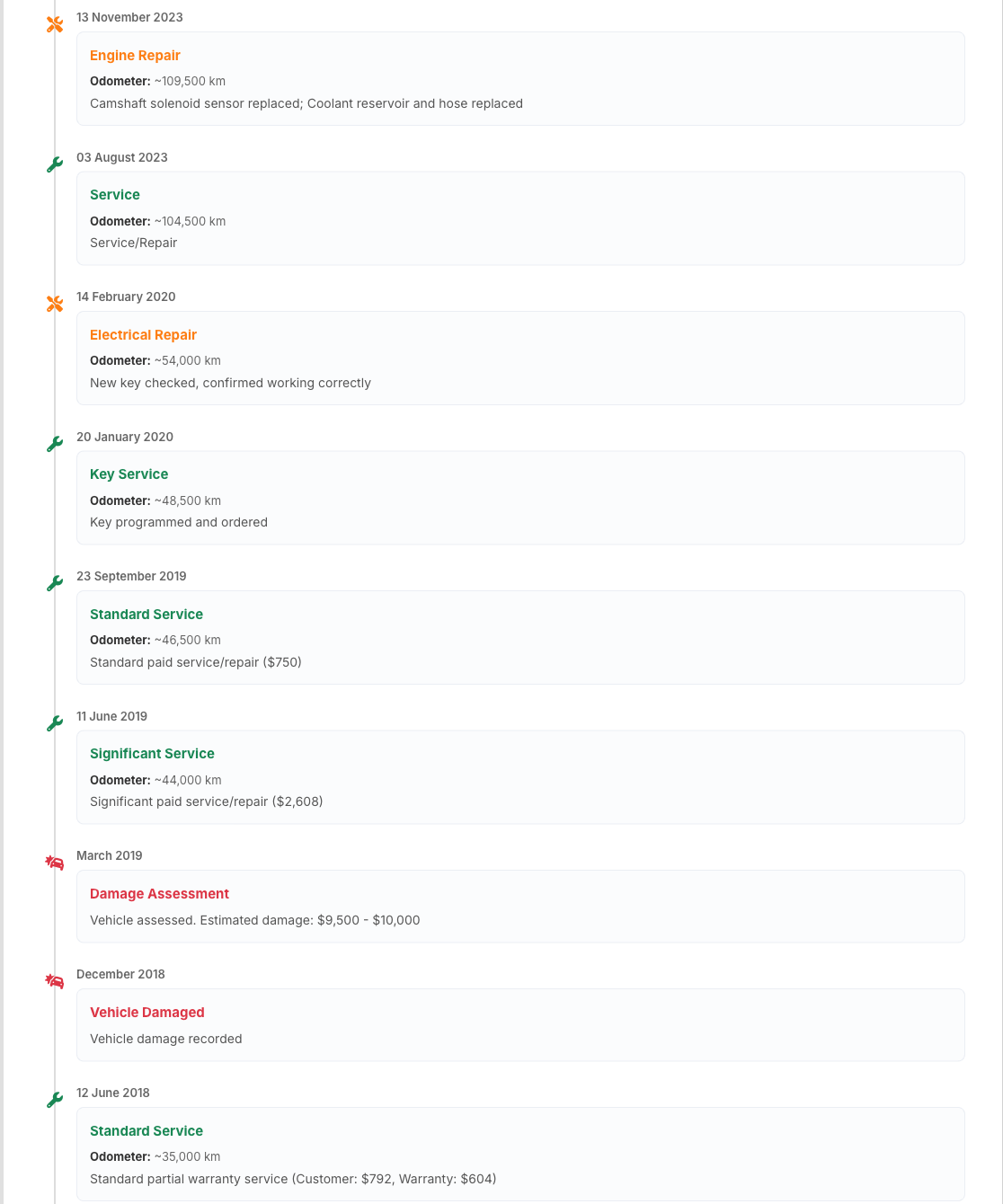
- Service history Service records from verified sources, showing how the car was looked after
- Recall repair status Recall repair and rectification status, so you know whether outstanding recalls were actually fixed
- Written-off check Written-off status from the national Written-Off Vehicle Register (WOVR)
- Damage assessments Damage assessments we hold, including damage that was repaired and never written off
- Odometer history Every odometer reading we hold for the vehicle, charted in date order with possible rollbacks flagged
- Registration and location history Registration and location history: the plates, states and suburbs we hold for the vehicle, the best clue to past owners
- Registration and PPSR certificate Current registration status, expiry and the official PPSR certificate, including any finance owing
Why no report can count a car's owners or name them
Each state and territory registry records who a car is registered to, known as the registered operator. Those records stay with the registry and aren't released nationally, and privacy rules stop the registries handing out owners' names or addresses to the public. The registered operator isn't always the legal owner, either.
That means there's no national owner count and no owner identities for any report to draw on. Any owner count you see in a national report is an estimate from other records, not a registry figure. A MotorRegistry report doesn't include an owner count or an owner's name, and we won't show a number we can't back up.
What matters more than the number of owners
Who owned a car, and how many of them there were, says much less about it than how it was treated. Four things decide whether it's a good buy:
How well it was looked after
Regular servicing is the single best predictor of how a car will run. Service records from verified sources show whether it was serviced on time, where records exist. See our vehicle service history report page.
Whether recalls were addressed
A recall notice goes to the address on file, so cars that have changed hands often miss them. Recall repair and rectification status shows whether the work was done. See our vehicle recall check page.
Whether it's been crashed
Most crash-damaged cars are repaired and resold without ever being written off, so they come back clean on a PPSR. Damage assessments show repaired damage too. See our written-off vehicle check page.
Whether the odometer adds up
Every reading we hold, charted in date order, so a reading that goes backwards between records stands out as a possible rollback. See our odometer history check page.
A three-owner car with a full service history, its recalls done and no damage on record is a better buy than a one-owner car with gaps nobody can explain. A Comprehensive Plus report shows those records, where they exist, in one place.
If you still want to estimate the owners, start with the logbook
The service logbook goes with the car from owner to owner, so it's the best clue to how many hands the car has passed through. Read it with that in mind:
The owner details at the front
Many logbooks have a page for the owner's name and address. Some show several names, with the earlier ones crossed out.
A change of workshop or town
A car serviced at the same workshop for years that moves to one in another suburb or town has often changed hands.
Dealer stamps far from home
Stamps from a dealer in a city or state a long way from where the seller lives point to an earlier owner somewhere else.
A change in handwriting or service pattern
A switch from on-time dealer services to irregular ones at a different workshop, or the other way round, often marks a new owner.
A long gap, then a different workshop
A gap in the services followed by a new workshop can mean the car sat unused for a while, or was sold to someone who let the servicing slip.
A big catch-up service
New owners often start with a major service to get the car back on schedule, so a large service soon after a gap is a common sign.
Make sure the logbook is genuine before you rely on it. Our vehicle logbook check page covers what to look for, and the vehicle service history report page explains the independent service records you can compare it with.
Registration and location history show the moves
A Comprehensive Plus report includes two records that help here:
Registration history
The plates and states we hold for the vehicle, with dates where we have them.
Location history
The suburbs the vehicle has been kept in, shown on a map.
Neither record names an owner. Read together with the logbook, they show when the car moved and where it went:
A new plate in a new state
Usually means the car was sold interstate or its owner moved.
A new plate in the same state
Can simply be personalised or replacement plates. Ask the seller.
A suburb change and a new workshop
A suburb change that lines up with a change of workshop in the logbook is a strong sign the car changed hands.
Three states in a few years
Deserves an explanation from the seller.
Interstate moves can hide things
Re-registering a car in another state is an old trick for tidying up its history, so check the moves against the damage, odometer and service records in the same report.
Other signs the car has changed hands
Past sales and auction listings
A Comprehensive Plus report includes the past sales and auction listings we hold for the car. Several listings close together can mean it has been bought and sold quickly, which is worth asking about.
The seller's own paperwork
Ask how they bought the car. A dealer invoice, private sale receipt or registration transfer receipt shows when they took it over.
How long they've owned it
Compare how long the seller says they've owned it with the registration dates. If they say they've had it for five years and the car was registered in another state last year, ask why.
Keys and accessories
A spare key that doesn't match, or several sets of aftermarket parts such as tow bars, roof racks or stereos, can point to a few owners with different ideas about the car.
Judge the car, not the count
Use the clues to ask the seller better questions, then decide on the records: servicing, recalls, damage and odometer.
Previous Owners Check FAQ
How do I check how many owners a car has had in Australia?
There's no national record you can search, and no report can give you a reliable count. Owner details are held by each state and territory registry and aren't released nationally. The logbook and the registration and location history in a MotorRegistry Comprehensive Plus report are the best clues, but the car's service, recall, damage and odometer records tell you far more about what you're buying.
Can I find out who owned a car before me?
No. Privacy laws mean the registries don't release the names or addresses of past owners, so no vehicle report can tell you who owned a car. A MotorRegistry report shows plates, states and suburbs, never names. The logbook may still have earlier owners' details in the front, and the seller can tell you who they bought the car from.
Does a MotorRegistry report show the number of previous owners?
No. Owner counts aren't released nationally, so no national report can include one, and we won't show a number we can't back up. A Comprehensive Plus report shows the plates and states we hold for the vehicle, with dates where we have them, and a map of the suburbs it has been kept in. Moves and re-registrations, especially interstate, often line up with a change of owner.
What matters more than the number of owners?
How the car was treated. Look for a full service history, recalls that were actually fixed, no undisclosed crash damage and an odometer that rises steadily between records. A MotorRegistry Comprehensive Plus report brings those records together, where they exist, so you can judge the car on its history rather than on a number.
Does a one-owner car matter?
Less than people think. A one-owner car can be well kept and well documented, but it can just as easily have been neglected or crashed. A well-serviced three-owner car with its recalls done and no damage on record is the better buy. Judge the car on its records, not the count.
Why does the car have plates from more than one state?
A car gets new plates when it's re-registered in another state, which usually means its owner moved or it was sold to someone interstate. Moving a car between states is also an old trick for tidying up its history, so several states in a short time is worth asking about. Ask the seller to explain the moves, and check them against the registration history in a Comprehensive Plus report.
Start with a PPSR check or a full car history check.
Check the car before you pay
Enter the rego or VIN to see what's on record for the vehicle.
Check a vehicle now
