Fake buyers are pressuring sellers into paying for a vehicle history report from a website they secretly run. Here's how to spot the trick, what you actually have to provide when you sell, and how to get a report you can trust.
You list your car, and within the hour a keen buyer messages you. They sound ready to commit. There's just one thing they need first: for you to grab a vehicle history report from one particular website, and they'll send you the link.
Don't do it. It's a scam, and right now it's all over Facebook Marketplace, Gumtree and Carsales.
How it works
The whole thing is back to front. Checking a car's history is the buyer's job. A genuine buyer does their own homework before handing over any money. This "buyer" flips that around: they want you, the seller, to pay for the report, and only from the exact site they've nominated.
That site belongs to them. You pay, the money goes straight to the scammer, and the "report" you get back is fake or blank. The details you typed in along the way can be worth even more to them than the fee: your card number and personal information can be used for further fraud, or quietly rolled into a recurring subscription you never agreed to. The price is kept small and reasonable on purpose, because it's easier to pay a few dollars than to stop and argue about it.

The dead giveaways
- They insist on one specific website you've never heard of. A real buyer doesn't care which provider you use, because they'd rather run the check themselves.
- They want you to pay for the report. That's the reverse of how a car sale actually works.
- They're in a hurry. "I'll buy it today, I just need you to run this check first."
- They won't inspect in person or take a call, and they try to move the conversation off-platform to text or WhatsApp.
- They send you a link. Don't click it. It can lead to a phishing page or drop malware on your phone.

There's a related trap worth knowing about. If a "buyer" texts you a six-digit code and asks you to read it back "to prove you're a real person", stop. That code is being used to hijack your phone number and set up a Google Voice account in your name. Never share a verification code with anyone, for any reason.
What to do
Never buy a history report just because a buyer told you to. If they want reassurance, they're free to run their own check. A real buyer will, a scammer won't. Don't click links from strangers, keep the deal on the platform you listed on, and meet in a safe, public place. If something feels off, report it to Scamwatch.
And if you'd like a report of your own to help your sale, which genuinely does help, choose the provider yourself. Never let a stranger pick it for you.
Do you even have to provide one?
Mostly, no. If you're selling privately, you are not legally required to hand over a vehicle history report or a PPSR certificate at all. You do have to genuinely own the car and not be hiding finance owing on it, but producing a certificate isn't compulsory. Dealers are a different story: everywhere in Australia, a licensed dealer has to guarantee clear title and, on eligible cars, provide a statutory warranty.
What you do have to provide as a private seller depends on your state, and it's usually the roadworthy, not the history report, that catches people out:
- QLD - A Safety Certificate is needed to sell or transfer a registered car, and it has to be displayed from the moment you advertise. You won't need one if you're selling the car unregistered or to a dealer.
- VIC - A Certificate of Roadworthiness is needed for a private sale, and it can't be more than 30 days old at the point of transfer, unless you're selling unregistered or to a licensed trader.
- NSW - A pink slip is tied to your registration renewal, not the sale itself. If you transfer a car with current rego, you don't need one just to sell it.
- SA, WA and TAS - No roadworthy is required for a private sale. The buyer takes on responsibility for roadworthiness once they've bought it.
- ACT and NT - Inspection requirements depend on your registration and the age of the vehicle at transfer.
The one rule that applies everywhere: lodge the transfer or notice of disposal promptly, usually within 14 days (7 in the ACT). That's what stops the new owner's fines and tolls from landing back on you.
Rules do change, so check the current requirements with your state transport authority before you sell.
Get a report that actually tells you something
A basic check confirms the legal status of a car: whether there's finance owing, whether it's been reported stolen or written off. That's useful, but it tells you nothing about what the car has actually been through.
That's the part we care about. A MotorRegistry report includes the official PPSR certificate and then goes a lot deeper, surfacing the things that tell you whether a car really is what the seller says it is:
- Service history - how well the car has actually been looked after over its life.
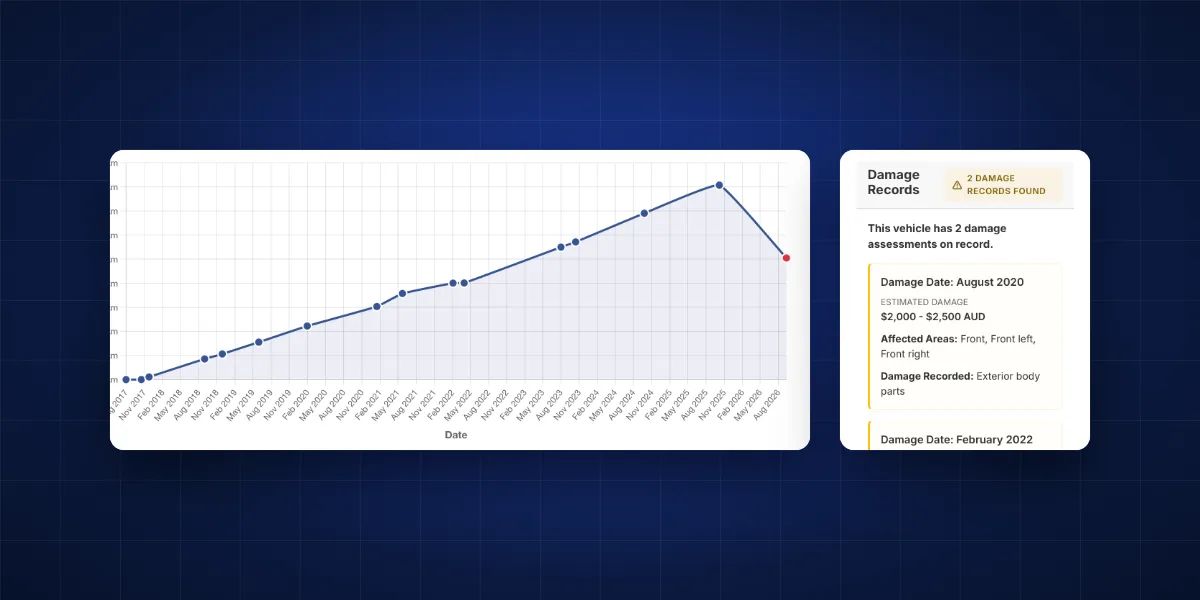
- Damage that never made the write-off register - plenty of serious repairs never reach that threshold, and we're built to surface them.
- Deep odometer records - a full trail of readings over time rather than a single number, so a wind-back has nowhere to hide.
- Location and movement history - where the car has lived and where it's been.
- Recall and service-campaign resolution - not just whether a recall exists, but whether the work was ever actually done.
If a history report is going to tell you this much, it'll be ours. We're a real, identifiable Australian business with secure payment and the official PPSR certificate built in, not a mystery link a stranger sent you.
So if a "buyer" ever insists you buy a report from their website before they'll commit, walk away. Real buyers do their own checks. Real reports come from a provider you chose. Get one on your own terms, from a source that actually tells you what's happened to the car.
Useful link: