What used EV buyers and sellers need to know
MotorRegistry Intelligence (MRI) platform data has revealed a significant spike in battery electric vehicle (BEV) interest within Australia's used car market. In March 2026, EV-related vehicle history report requests nearly tripled compared to the prior month, and when normalised against total report volume, demand was roughly three times higher than the 2025 monthly average. Early April data suggests the momentum is continuing at a similar pace.
The timing is no coincidence. The escalation of conflict in the Middle East and the disruption of the Strait of Hormuz in early March sent fuel prices surging - unleaded petrol climbed above $2.50 per litre nationally, with diesel exceeding $3.00 in parts of Sydney. New EV sales tell a similar story: BEVs reached a record 14.6% market share in March with 15,839 units registered, up 88.9% year-on-year.
Source: MotorRegistry Intelligence - anonymised, aggregated report request data
A window for sellers of 3–5 year old EVs
For owners of EVs purchased between 2021 and 2023, the current market presents a strong opportunity to realise better resale values.
Used EV stock remains tight - EVs still account for less than 1% of the broader used car market despite now representing over 10% of new sales. Auction house Pickles reported second-hand EV sales in March were up 60% on February, with 82% of used EVs selling under $50,000. Commonwealth Bank reported a 161% lift in EV finance enquiries from the start of March alone.
If you own a Tesla Model 3, Hyundai Ioniq 5, BYD Atto 3, or similar model from this period, your vehicle sits in a sweet spot - modern enough to have competitive range and features, and likely still covered by the manufacturer's battery warranty.
What buyers should check
For those entering the used EV market, a few checks differ from a traditional used car purchase.
Battery health
The battery pack is the most expensive component, so understanding its condition is critical. The good news is that real-world data consistently shows batteries holding up better than early sceptics predicted.
Geotab's 2026 study of over 22,700 EVs found an average annual degradation rate of 2.3%. At that rate, a five-year-old EV typically retains around 88–90% of its original capacity. A separate UK study by Generational analysing over 8,000 EVs found an average state of health of 95.15%, with 8–9 year old vehicles still retaining a median capacity of 85%. University of Michigan research published in early 2026 confirmed that batteries manufactured from 2019 onwards show significantly improved resilience compared to earlier generations.
The real issue is variance - two identically aged EVs can have quite different battery health depending on how they were charged and driven. Most EVs don't display state of health to the buyer, so request a diagnostic check through an authorised dealer or use an OBD-II scanner with an EV-specific app.
Charging compatibility
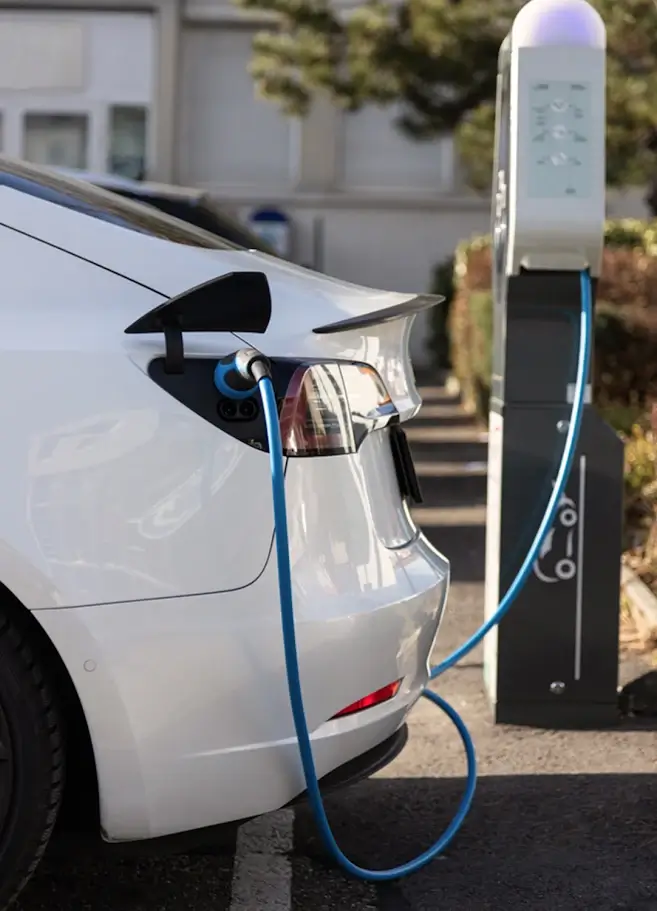
EVs sold in Australia from 2019 onwards generally use Type 2 (AC) and CCS2 (DC) connectors, compatible with the vast majority of public infrastructure. Older models need extra attention - early Nissan Leafs use CHAdeMO (being phased out, no adapter to CCS2 exists), pre-2018 BMW i3s use Type 1 CCS, and pre-2020 Tesla Model S/X have a modified Type 2 port requiring an adapter for non-Tesla DC charging. Always confirm the portable charging cable is included - replacements cost several hundred dollars.
Model-specific considerations
The first-generation Nissan Leaf uses air-cooled batteries rather than liquid cooling, meaning degradation can be significantly higher in warmer climates like Queensland. Older Tesla Model S/X vehicles may still run the original MCU1 infotainment unit (pre-March 2018), which is prone to eMMC chip failure. Grey-imported EVs may have non-Australian language software and may not receive over-the-air updates.
Check whether the manufacturer's battery warranty transfers to a second owner - most Australian-delivered EVs carry 7–8 year, 150,000–160,000 km battery warranties guaranteeing a minimum of 70% SoH.
The bigger picture
What the MRI data shows clearly is that Australians are actively researching used EVs at a rate we haven't seen before. For sellers of 3–5 year old electric vehicles, the combination of constrained supply, rising fuel costs, and strong residual battery health makes this an opportune time. For buyers, the used EV segment offers genuine value - provided you do your homework on battery condition, charging compatibility, and model-specific considerations.
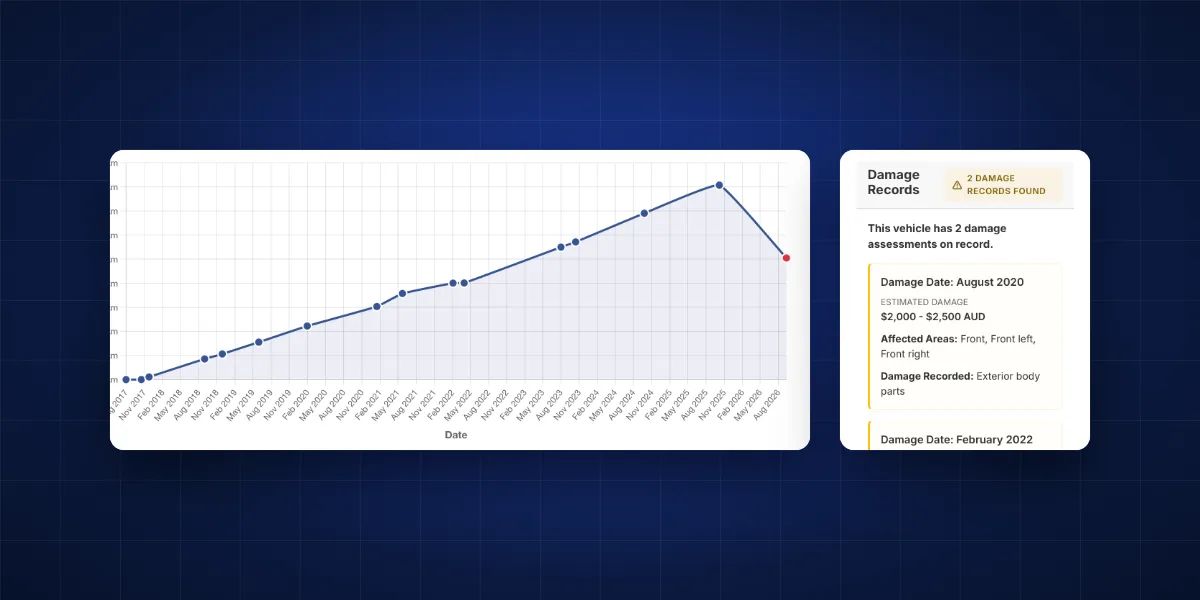
A vehicle history report from MotorRegistry provides a comprehensive picture - covering registration and location history, odometer records, service history, damage assessments, written-off status, and outstanding finance - essential checks before committing to any used car purchase.
Data source:
- MotorRegistry Intelligence (MRI) - anonymised, aggregated report request volumes across the MRI platform